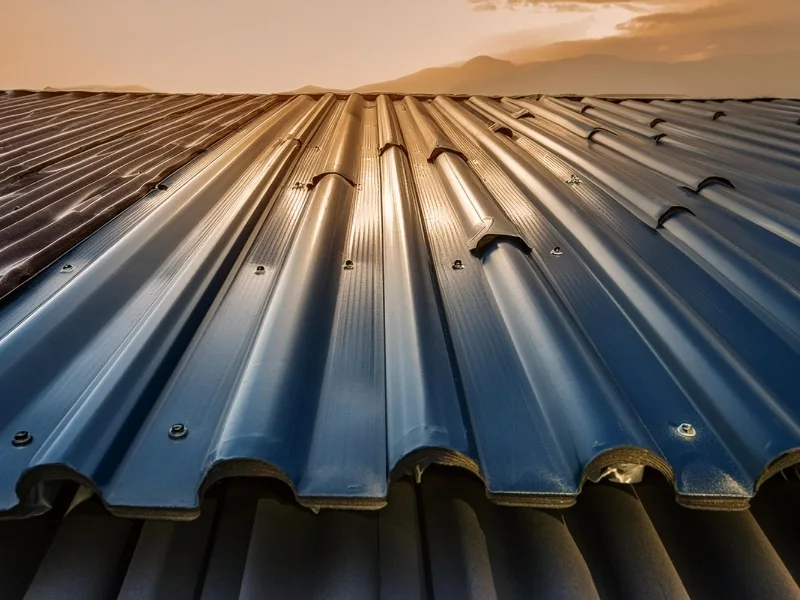
Repairing or Replacing Fasteners
Fasteners can be repaired or replaced to restore the seal, and a Geist homeowner benefits from understanding how. Here is what is involved.
Re-Tightening Loose Fasteners
Loose fasteners that are still sound can sometimes be re-tightened, restoring their hold and seal if the screw and washer are still good. Re-tightening can help. It restores the hold. It suits sound fasteners. It is a simple fix. It addresses loosening.
Replacing Failed Fasteners
Fasteners that have failed, stripped, backed out, or with worn washers, are replaced, sometimes with a larger fastener that holds securely in the hole, restoring the seal. Failed fasteners are replaced. A larger one may be used. It holds securely. It restores the seal. It is the proper fix.
Renewing the Washers
Replacing fasteners renews the sealing washers, so the new fasteners seal properly at those points. New fasteners bring new washers. They seal properly. They restore water-tightness. They renew the seal. It is part of the fix.
Addressing the Whole Roof if Needed
If many fasteners are aging, addressing them across the roof, sometimes replacing fasteners throughout, restores the roof's overall seal. Whole-roof attention may be needed. It addresses aging fasteners. It restores the seal broadly. It suits older roofs. It is thorough.
Done by a Professional
Fastener repair and replacement is best done by a professional, who can assess the fasteners and do the work properly to restore the seal. A professional does it. They assess the fasteners. They do it right. They restore the seal. It is worth their expertise.
Repairing Fasteners, in Short
Loose but sound fasteners can be re-tightened, while failed ones are replaced, sometimes with larger fasteners that hold securely, renewing the sealing washers, and if many fasteners are aging, addressing them across the roof restores the overall seal, best done by a professional.
One point worth making clear for Geist homeowners is that exposed-fastener metal roofs, which are a common and economical type of metal roofing, have a particular maintenance consideration that homeowners should understand, the fasteners themselves. On these roofs, the panels are held in place by screws that are driven through the face of the panels, with the screw heads visible on the surface, which is what gives this type of roof its name. Crucially, each of these screws has a washer, typically with a rubber or similar gasket, that seals around the screw to keep water from entering at that penetration point. This means that every fastener is, in effect, a small sealing point on the roof, and because there can be many of them, they collectively matter a great deal to the roof's water-tightness. The thing to understand is that, over time, these fasteners can develop issues. Temperature changes cause the metal to expand and contract, and over the years this repeated movement can work fasteners loose or affect their hold. The sealing washers can wear or degrade from weathering and sun exposure, reducing their seal. And fasteners can back out, with screws gradually loosening or rising from the panel. None of this is a sign that anything is wrong with the roof in a fundamental sense, rather, it is a normal maintenance consideration that comes with an exposed-fastener system, because the fasteners are wear points that may need attention over the roof's life. This is actually one of the differences between exposed-fastener roofs and standing seam, which uses concealed fasteners hidden in the seams and so does not have exposed screws to maintain in the same way.
One point worth making clear for Geist homeowners is that exposed-fastener metal roofs, which are a common and economical type of metal roofing, have a particular maintenance consideration that homeowners should understand, the fasteners themselves. On these roofs, the panels are held in place by screws that are driven through the face of the panels, with the screw heads visible on the surface, which is what gives this type of roof its name. Crucially, each of these screws has a washer, typically with a rubber or similar gasket, that seals around the screw to keep water from entering at that penetration point. This means that every fastener is, in effect, a small sealing point on the roof, and because there can be many of them, they collectively matter a great deal to the roof's water-tightness. The thing to understand is that, over time, these fasteners can develop issues. Temperature changes cause the metal to expand and contract, and over the years this repeated movement can work fasteners loose or affect their hold. The sealing washers can wear or degrade from weathering and sun exposure, reducing their seal. And fasteners can back out, with screws gradually loosening or rising from the panel. None of this is a sign that anything is wrong with the roof in a fundamental sense, rather, it is a normal maintenance consideration that comes with an exposed-fastener system, because the fasteners are wear points that may need attention over the roof's life. This is actually one of the differences between exposed-fastener roofs and standing seam, which uses concealed fasteners hidden in the seams and so does not have exposed screws to maintain in the same way.
One point worth making clear for Geist homeowners is that exposed-fastener metal roofs, which are a common and economical type of metal roofing, have a particular maintenance consideration that homeowners should understand, the fasteners themselves. On these roofs, the panels are held in place by screws that are driven through the face of the panels, with the screw heads visible on the surface, which is what gives this type of roof its name. Crucially, each of these screws has a washer, typically with a rubber or similar gasket, that seals around the screw to keep water from entering at that penetration point. This means that every fastener is, in effect, a small sealing point on the roof, and because there can be many of them, they collectively matter a great deal to the roof's water-tightness. The thing to understand is that, over time, these fasteners can develop issues. Temperature changes cause the metal to expand and contract, and over the years this repeated movement can work fasteners loose or affect their hold. The sealing washers can wear or degrade from weathering and sun exposure, reducing their seal. And fasteners can back out, with screws gradually loosening or rising from the panel. None of this is a sign that anything is wrong with the roof in a fundamental sense, rather, it is a normal maintenance consideration that comes with an exposed-fastener system, because the fasteners are wear points that may need attention over the roof's life. This is actually one of the differences between exposed-fastener roofs and standing seam, which uses concealed fasteners hidden in the seams and so does not have exposed screws to maintain in the same way.
Get Your Fasteners Repaired Right
Geist Metal Roofing repairs and replaces metal roof fasteners across Geist and Hamilton County. Call (765) 676-3491 for a free inspection and proper fastener repair that restores your roof's seal.